Saturday, 13 June 2020

Tribute To Tessy Yembra


I first met Tessy Yembra at the Head Office of the Performing Musicians Association of Nigeria, PMAN located at Ikeja, Lagos. She was a dancer and choreographer of Yoruba popular dances. At the time she told me of her dream to organise a musical show tagged: Sons of the Legends'' she told me the musical show will parade sons of legendary Nigerian musicians such as Fela Anikulapo Kuti, I K Dairo, King Sunny Ade who are into music like their fathers. At the time, Tessy was looking for corporate sponsorship for her dreamed musical show.

Tessy Yembra talked enthusiastically about this wonderful musical show. How it will promote Nigerian music. I waited to see the show but i guess she couldn't raise the money necessary to put it together. 

Our parts soon crossed years later when we met at the Federal Palace Hotel in Lagos I asked her about her dreamed  show. She was still looking for support. 

Tessy Yembra passed away suddenly May 27nd this year to the great beyond, according to reports.  Yembra was a popular society figure, who came into the limelight with her dance steps in the Fuji Garbage and Afro Juju videos of Chief Sikiru Ayinde Barrister and Sir Shina Peters among others.

 Her daughter, Dolapo Beckley will continue her legacy. 


Disqualification: APC not fair to Obaseki – Babatope


A chieftain of the Peoples’ Democratic Party (PDP), Chief Ebenezer Babatope, on Saturday said the All Progressives Congress (APC) was not fair to Gov. Godwin Obaseki by disqualifying him from participating in the party’s primary.

Babatope, a former Minister of Transportation, expressed the view in a telephone interview with the News Agency of Nigeria (NAN) in Lagos.

NAN reports the APC screening committee had on Friday announced the disqualification of Obaseki from the party’s governorship primary, scheduled for June 22.Prof. Jonathan Ayuba, Chairman of the committee based the governor’s disqualification on issues with his Higher School and his National Youth Service Corps (NYSC) certificates.

Reacting, Babatope said, though he is not a member of APC, he viewed the disqualification by the ruling party as the humiliation of Obaseki.

He said the disqualification was punishment meted to the governor for doing nothing.

“You know I am not a member of the APC but I must say what the party has done to the governor is not fair.

“We should have gotten to a stage in this country where politicians look at issues dispassionately and not because they belong to a particular party,’’ Babatope said.He said that even as a PDP member, he was saying that the way Obaseki was being treated was unjust and unfair.

“They are just punishing him for doing nothing really.

“The governor contested and won on your platform the first term, nothing was wrong.

“Are you just seeing all the issues with his certificates? Too bad.

“Personally, I am not happy with the way he is being treated because we are talking about fairness and justice here, and that does not mean I support him to win against my party, the PDP.’’

He said that APC should have given the governor the opportunity to defend himself, noting that his disqualification was unfair.

Babatope said he would be the happiest person if the embattled governor made the decision to join the PDP “owing to what he is going through in APC’’.

He said the PDP was a party for all and would welcome the governor anytime he decided to join the main opposition party.

Babatope said the results of the 2019 Presidential and National Assembly elections showed that Edo was for PDP.

He said the PDP would win the state governorship election in a landslide if the contest was fair. (NAN)

The 29th Annual Pan African Film Festival Opens Its Call For Entries


PAFF Newsletter Art, Film & Cultural News & Events
The staff of the Pan African Film Festival wants you and your family to stay safe during this Covid-19 Pandemic. As the coronavirus continues to rip through our nation leaving behind thousands of victims in its path, our communities of Blacks and Brown have been infected and their residents killed at a disproportionate rate residents across the country. After this virus is done infecting… our world will not be the same.” 

Although COVID-19 has been slow to arrive in Africa, or at least has been slow to be detected there, the wave is coming. They are preparing for disaster. Right now the numbers may appear manageable. The African countries with the most confirmed COVID-19 cases are South Africa (1,934), Algeria (1,666), Egypt (1,560), and Morocco (1,374). No sub-Saharan country other than South Africa has more than 1,000 cases. The countries hardest hit are those most connected with international travel, especially to France. (Kenya, at 184 cases; Ethiopia, at 56; and Nigeria, at 276, have numbers that remain suspiciously low.) Burkina Faso—not an especially connected country, or one with a huge population—has 414 cases. Every country in Africa has testing kits, many of them due to the largesse of China’s Jack Ma. In some countries, such as Rwanda (110), quarantines and the careful tracing of contacts have kept the numbers down. 

PAFF family, please continue to adhere to the following guidelines to HELP SLOW THE SPREAD OF COVID-19 in our communities:

  • Stay home if you can and avoid any non-essential travel. Avoid social gatherings of more than 10 people.
  • Practice social distancing by keeping at least 6 feet — about two arm lengths — away from others if you must go out in public. Stay connected with loved ones through video and phone calls, texts and social media. Avoid close contact with people who are sick.
  • Wash your hands often with soap and water for at least 20 seconds, especially after being in a public place, or after blowing your nose, coughing or sneezing. If soap and water are not readily available, use a hand sanitizer with at least 60% alcohol.
  • Avoid touching your eyes, nose and mouth with unwashed hands.
  • Clean and disinfect household surfaces daily and high-touch surfaces frequently throughout the day. High-touch surfaces include phones, remote controls, counters, tabletops, doorknobs, bathroom fixtures, toilets, keyboards, tablets and bedside tables. Follow CDC guidance.
  • Cover your coughs and sneezes. Use a tissue to cover your nose and mouth, and throw used tissues in a lined trash can. If a tissue isn’t available, cough or sneeze into your elbow — not your hands. Wash your hands immediately.

We hope to see you next year at the 29th Pan African Film Festival. Until then, we’ll continue to keep you and your family in our prayers.  
The 29th Annual Pan African Film Festival (PAFF) 
Opens Its “Call for Entries”
The Pan African Film Festival (PAFF) is gearing up to once again take moviegoers on a cinematic world journey with international film screenings with the announcement of its “Call for Entries”.
The 29th Annual PAFF, America’s largest and most prestigious Black film festival, will be held in February, 2021 either with a physical festival in Los Angeles, a world-wide virtual festival or a combination of both. Over the years, PAFF has showcased films from all parts of the world, representing such countries as the United States, Angola, Nigeria, Jamaica, New Zealand, Rwanda, Canada, Mozambique, Venezuela, Egypt, the Dominican Republic, Ethiopia, Ghana, Brazil, Kenya, Fiji, Mexico, the U.K., South Africa, England, Japan, Trinidad & Tobago, France and Canada. With the pulse on the international film market, PAFF has opened the minds of its audiences, and transported them to far-away places and back home again. “Over the years, filmmakers the world over have become more sophisticated in telling their stories,” says Asantewa Olatunji, the director of programming for PAFF. “In our ever-shrinking world, it is so important to understand the experiences and points of views of the world’s diverse peoples and cultures.”
Last year, more than 40,000 people attended the film festival, which has long been a highly anticipated event in Los Angeles attended by local, national and international guests. PAFF currently accepts only online applications and submissions. As of June 1, 2020 filmmakers wanting to submit to PAFF2021 can submit through FilmFreeway at filmfreeway.com and typing in the Pan African Film Festival or can go to the PAFF website www.paff.org and clicking onto the FilmFreeway button or the “Submit a Film” button on the menu.
ELIGIBILITY:
PAFF accepts applications for films, videos and webisodes made by and/or about people of African descent. (Please note: the filmmaker need not be of African descent.) Preferably, submissions should depict positive and/or realistic images and can be of any genre — drama, comedy, horror, action/adventure, animation, romance, science fiction, experimental, historical/epic, etc. PAFF accepts narrative and documentary features, shorts and webisodes.
COMPETITION:
The PAFF competition categories are: Best Narrative Feature, Best Narrative Short, Best Documentary (Short or Feature), Best Director — First Feature, Best Web-Series, plus a variety of Audience Favorite Awards. Films in competition must be copyrighted no earlier than 2019. With the exception of Audience Favorite Awards, films are judged by industry professionals. In addition to competition awards, other programming and festival special prizes will be awarded.
SUBMISSION PERIODS:

Early Submissions (Reduced Entry Fee): Currently being accepted through July 15, 2020.
Regular Submissions: July 16-September 20, 2020.
Late Submissions: September 21- October 30, 2020.
Extended Late Submissions: October 31-December 10, depending on available space.
After December 10, the submitter must contact submissions@paff.org to obtain permission to submit.

For submission instructions, information, fees and registration kindly go to www.paff.org and click onto “Submit a Film”. For questions regarding submissions, email submissions@paff.org.


ABOUT THE PAN AFRICAN FILM FESTIVAL
In its 29th year, the Pan African Film Festival (PAFF), is America’s largest and most prestigious Black film festival. Each year, it screens more than 185 films made by and/or about people of African descent from the United States, Africa, the Caribbean, South America, the South Pacific, Latin America, Europe and Canada. In conjunction with its simultaneous Art Showcase, PAFF holds the distinction of being the largest Black History Month event in the US.
PAFF was founded in 1992 by award-winning actor Danny Glover (“The Color Purple,” “Lethal Weapon”), the late Emmy Award-winning actress Ja’Net DuBois (best known for her role as Willona in the TV series, “Good Times”) and executive director, Ayuko Babu, an international legal, cultural and political consultant who specializes in African Affairs. PAFF is a non-profit corporation dedicated to the promotion of ethnic and racial respect and tolerance through the exhibit of films, art and other creative expressions.
The goal of PAFF is to present and showcase the broad range of Black creative works, particularly those that reinforce positive images, help to destroy negative stereotypes and depict an expanded vision of the Black experience. PAFF believes film and art can lead to better understanding and foster communication between peoples of diverse cultures, races, and lifestyles, while at the same time, serves as a vehicle to initiate dialogue on the important issues of our time.
For more information, please visit www.paff.org or email info@paff.org.
Click on flyer to submit!
THE NEXT PAFF INSTITUTE WILL BE JUNE 27TH! DETAILS COMING SOON!
Launching June 19th! The Ultimate Podcast, Blaine Teamer & Indira Wilson's best work yet!
Things To Watch While Safe At Home
THESE PAFF TITLES FROM THIS YEAR AND PREVIOUS YEARS HAVE BEEN SPOTTED ON VARIOUS STREAMING PLATFORMS!

The Delivery Boy- Netflix
The Love Between Us- Amazon
Okafor's Law- Netflix
Repentance- Amazon
Sprinter- Netflix
Frankie & Alice- Amazon
Kalushi- Netflix
Bilal- Amazon
Cook Off- Netflix
Canal Street- Amazon
Vaya- Netflix
No Shade- Amazon
The Burial of Kojo- Netflix
Brown Paper Bag- Amazon
The 4th Republic- Amazon
93 Days- Netflix/Amazon

THANK YOU TO ALL OF OUR SPONSORS!
The Pan African Film Festival would like to thank the generous support of
Los Angeles City Council President Emeritus Herb J. Wesson, Jr. of District 10 (left)
and
Los Angeles County Supervisor Mark Ridley-Thomas (right)
for their generous support of the film festival and art show.
ABOUT THE PAN AFRICAN FILM FESTIVAL
The Pan African Film and Arts Festival (PAFF) is America's largest and most prestigious Black film festival. Each year, it screens more than 150 films made by and/or about people of African descent from around the world. PAFF holds the distinction of being the largest Black History Month event in the country. The Academy of Motion Picture Arts and Sciences (AMPAS) has designated PAFF as an official qualifying film festival for live action and animation short films.

PAFF is a non-profit corporation, founded in 1992 by award-winning actor Danny Glover (“The Color Purple,” “Lethal Weapon” movie franchise), Emmy Award-winning actress Ja’Net DuBois (best known for her role as Willona in the TV series, “Good Times”) and executive director, Ayuko Babu, an international legal, cultural and political consultant who specializes in Pan African Affairs. PAFF is dedicated to the promotion of ethnic and racial respect and tolerance through the exhibit of films, art and creative expression.

The goal of PAFF is to present and showcase the broad spectrum of Black creative works, particularly those that reinforce positive images, help to destroy negative stereotypes and depict an expanded vision of the Black experience. PAFF believes film and art can lead to better understanding and foster communication between peoples of diverse cultures, races, ethnicities, and lifestyles in an entertaining way while at the same time, serving as a vehicle to initiate dialogue on the important issues of our times.

For more information, please visit www.paff.org, email info@paff.org, or call (310) 337-4737.

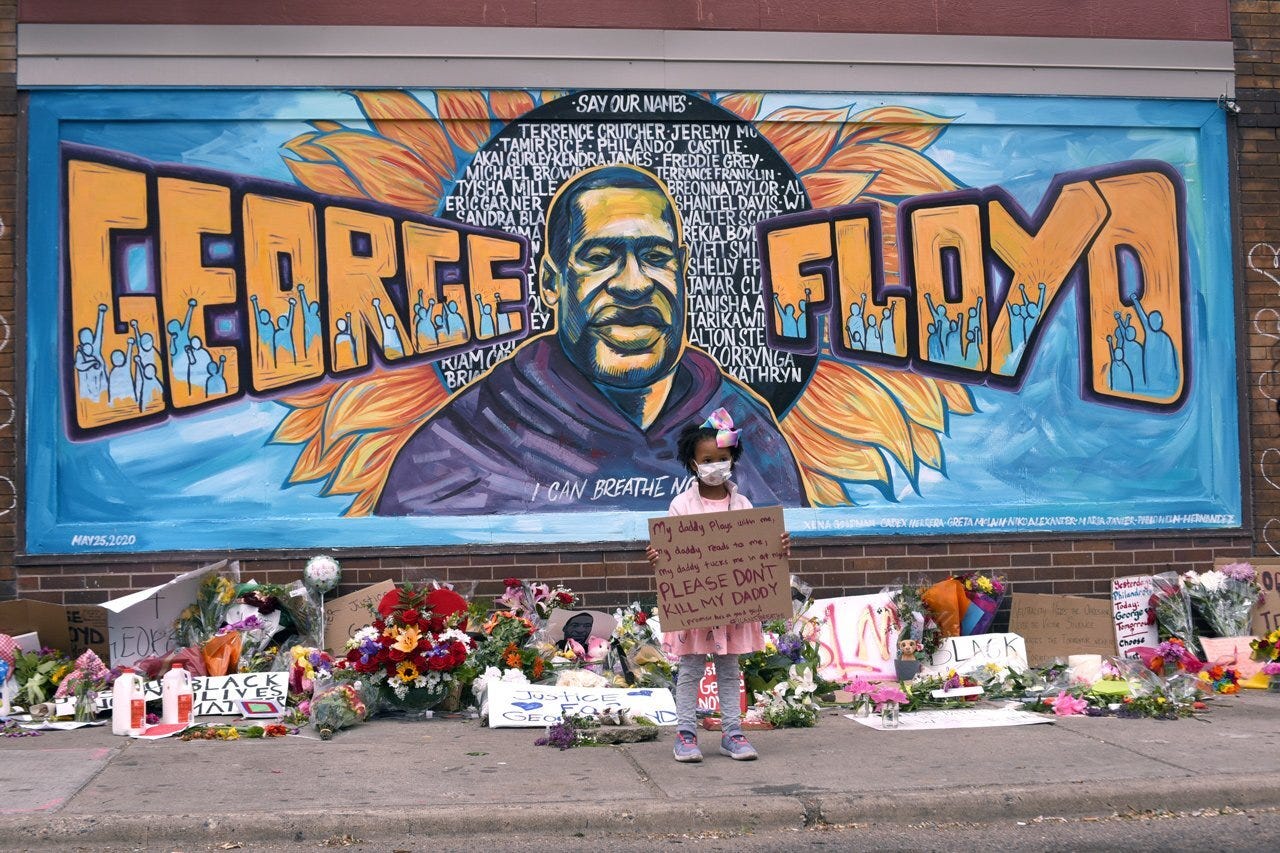
Barack Obama''s Essay on Racial Equality


How to Make this Moment the Turning Point for Real Change

Photo by Xena Goldman

As millions of people across the country take to the streets and raise their voices in response to the killing of George Floyd and the ongoing problem of unequal justice, many people have reached out asking how we can sustain momentum to bring about real change.

Ultimately, it’s going to be up to a new generation of activists to shape strategies that best fit the times. But I believe there are some basic lessons to draw from past efforts that are worth remembering.

First, the waves of protests across the country represent a genuine and legitimate frustration over a decades-long failure to reform police practices and the broader criminal justice system in the United States. The overwhelming majority of participants have been peaceful, courageous, responsible, and inspiring. They deserve our respect and 

support, not condemnation — something that police in cities like Camden and Flint have commendably understood.

On the other hand, the small minority of folks who’ve resorted to violence in various forms, whether out of genuine anger or mere opportunism, are putting innocent people at risk, compounding the destruction of neighborhoods that are often already short on services and investment and detracting from the larger cause. I saw an elderly black woman being interviewed today in tears because the only grocery store in her neighborhood had been trashed. If history is any guide, that store may take years to come back. So let’s not excuse violence, or rationalize it, or participate in it. If we want our criminal justice system, and American society at large, to operate on a higher ethical code, then we have to model that code ourselves.

Second, I’ve heard some suggest that the recurrent problem of racial bias in our criminal justice system proves that only protests and direct action can bring about change, and that voting and participation in electoral politics is a waste of time. I couldn’t disagree more. The point of protest is to raise public awareness, to put a spotlight on injustice, and to make the powers that be uncomfortable; in fact, throughout American history, it’s often only been in response to protests and civil disobedience that the political system has even paid attention to marginalized communities. But eventually, aspirations have to be translated into specific laws and institutional practices — and in a democracy, that only happens when we elect government officials who are responsive to our demands.

Moreover, it’s important for us to understand which levels of government have the biggest impact on our criminal justice system and police practices. When we think about politics, a lot of us focus only on the presidency and the federal government. And yes, we should be fighting to make sure that we have a president, a Congress, a U.S. Justice Department, and a federal judiciary that actually recognize the ongoing, corrosive role that racism plays in our society and want to do something about it. But the elected officials who matter most in reforming police departments and the criminal justice system work at the state and local levels.

It’s mayors and county executives that appoint most police chiefs and negotiate collective bargaining agreements with police unions. It’s district attorneys and state’s attorneys that decide whether or not to investigate and ultimately charge those involved in police misconduct. Those are all elected positions. In some places, police review boards with the power to monitor police conduct are elected as well. Unfortunately, voter turnout in these local races is usually pitifully low, especially among young people — which makes no sense given the direct impact these offices have on social justice issues, not to mention the fact that who wins and who loses those seats is often determined by just a few thousand, or even a few hundred, votes.

So the bottom line is this: if we want to bring about real change, then the choice isn’t between protest and politics. We have to do both. We have to mobilize to raise awareness, and we have to organize and cast our ballots to make sure that we elect candidates who will act on reform.

Finally, the more specific we can make demands for criminal justice and police reform, the harder it will be for elected officials to just offer lip service to the cause and then fall back into business as usual once protests have gone away. The content of that reform agenda will be different for various communities. A big city may need one set of reforms; a rural community may need another. Some agencies will require wholesale rehabilitation; others should make minor improvements. Every law enforcement agency should have clear policies, including an independent body that conducts investigations of alleged misconduct. Tailoring reforms for each community will require local activists and organizations to do their research and educate fellow citizens in their community on what strategies work best.

But as a starting point, here’s a report and toolkit developed by the Leadership Conference on Civil and Human Rights and based on the work of the Task Force on 21st Century Policing that I formed when I was in the White House. And if you’re interested in taking concrete action, we’ve also created a dedicated site at the Obama Foundation to aggregate and direct you to useful resources and organizations who’ve been fighting the good fight at the local and national levels for years.

I recognize that these past few months have been hard and dispiriting — that the fear, sorrow, uncertainty, and hardship of a pandemic have been compounded by tragic reminders that prejudice and inequality still shape so much of American life. But watching the heightened activism of young people in recent weeks, of every race and every station, makes me hopeful. If, going forward, we can channel our justifiable anger into peaceful, sustained, and effective action, then this moment can be a real turning point in our nation’s long journey to live up to our highest ideals.

Let’s get to work.

Aje: The Yoruba Spirit of Wealth, Prosperity, and Divine Balance

Yemi Olakitan                              Among the revered deities in Yoruba spirituality, Aje occupies a cherished place as the Oris...